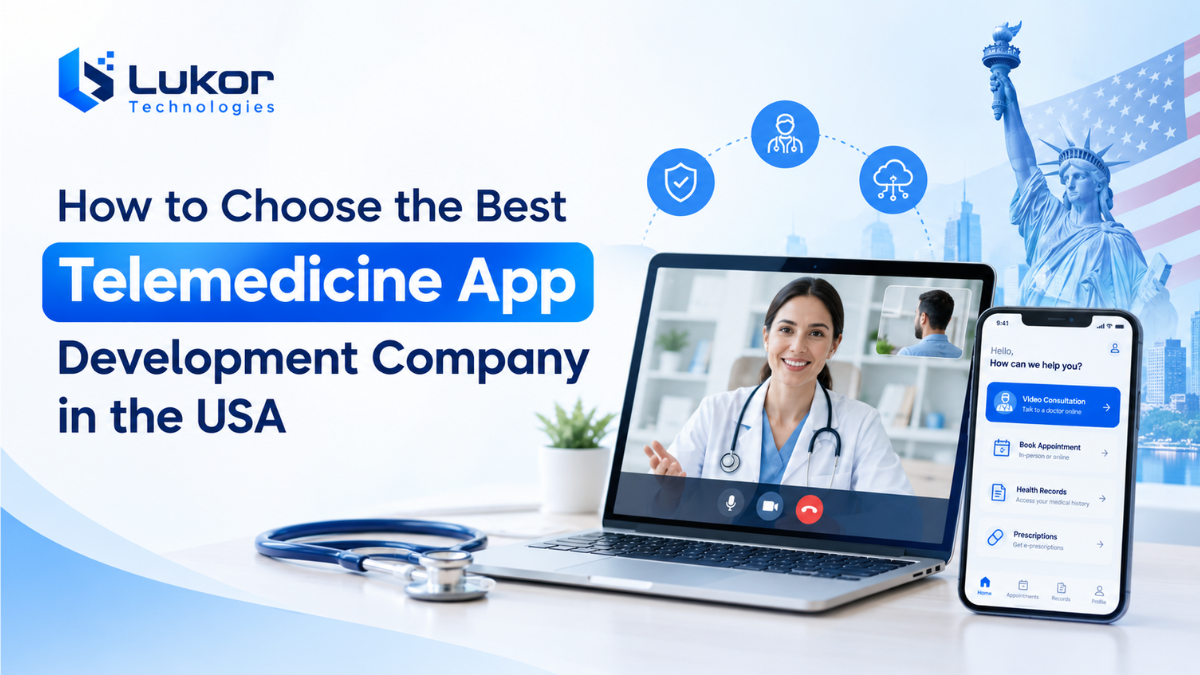
Choosing the right telemedicine app development company is an important decision for healthcare providers, hospitals, clinics, healthcare startups, and organizations planning to launch or improve a digital healthcare solution. The right development partner can help turn an idea into a secure, scalable telemedicine platform that supports virtual consultations, appointment management, secure communication, healthcare integrations, and better patient experiences.
However, not every software development company has the healthcare expertise, technical capabilities, security practices, and long-term support required to build a successful telemedicine application. The growing U.S. telehealth market also highlights the increasing demand for reliable and scalable digital healthcare solutions. According to Mordor Intelligence, the U.S. telehealth market is projected to grow from $66.75 billion in 2025 to $198.77 billion by 2030, representing a 24.39% CAGR.
Before selecting a development partner, evaluate its healthcare experience, technical expertise, security and compliance capabilities, portfolio, development process, communication, pricing, and post-launch support.
This guide explains how to choose a telemedicine app development company in the USA, what to evaluate before hiring one, and how to compare potential development partners.
Why Choosing the Right Telemedicine App Development Company Matters
A telemedicine application handles sensitive healthcare information and connects patients with healthcare professionals through digital channels. As a result, the development partner you choose can have a significant impact on application security, reliability, usability, scalability, and long-term maintenance.
Choosing an experienced development partner can help you:
- Build a secure and reliable telemedicine application
- Create better experiences for patients and healthcare providers
- Address healthcare data security and compliance requirements
- Integrate EHR, EMR, payment, communication, and other third-party systems
- Develop a scalable platform that can support future growth
- Reduce technical risks and unnecessary development costs
- Maintain and improve the application after launch
The U.S. telehealth market is expected to grow significantly in the coming years. According to Grand View Research, the market is projected to reach $150.13 billion by 2030, growing at a 23.8% CAGR from 2025 to 2030. This expected growth makes scalability, security, interoperability, and long-term technical support important considerations when selecting a telemedicine app development company.
The right partner should understand both software engineering and the specific requirements of digital healthcare.
What to Look for in a Telemedicine App Development Company
When evaluating telemedicine app developers, look beyond general software development experience. A strong development partner should have relevant healthcare expertise, technical capabilities, security knowledge, and the ability to support your application as it grows.
Healthcare and Telemedicine Experience
Healthcare applications require an understanding of patient privacy, clinical workflows, provider needs, appointments, and virtual consultations. Look for experience with:
- Telemedicine and telehealth applications
- Healthcare software platforms
- Patient and provider applications
- Healthcare integrations
- Remote consultation solutions
- Healthcare data security
Relevant experience can help developers identify healthcare-specific requirements early and build solutions around real-world workflows. Businesses can also review healthcare software development capabilities to understand how a development partner approaches healthcare-specific requirements and digital solutions.
Technical Expertise and Development Capabilities
A telemedicine software development company should have the expertise to build secure, reliable, and scalable web and mobile applications. The company should also provide comprehensive telemedicine app development services covering the technical requirements of your project from planning and development through deployment.
Evaluate its capabilities in:
- Mobile and web development
- Backend and API development
- Cloud infrastructure
- Database architecture
- Third-party integrations
- Quality assurance and testing
- Application security
- DevOps and deployment
Also consider whether the company can support the product beyond the MVP as new features, integrations, and performance requirements emerge.
HIPAA Compliance and Healthcare Data Security
Security is a critical consideration when selecting a telemedicine development partner. A HIPAA-compliant telemedicine app development approach should address how protected health information is collected, processed, transmitted, stored, and accessed when HIPAA applies.
Ask how the company handles:
- Data encryption
- Secure authentication
- Role-based access controls
- API security
- Audit logging
- Secure data storage
- Vulnerability testing
- Access management
HIPAA compliance involves more than application features. It requires appropriate technical safeguards, processes, policies, and infrastructure throughout the project.
UI/UX Design Expertise
A telemedicine application should be simple and intuitive for both patients and healthcare professionals. Evaluate whether the development company considers:
- Patient and provider workflows
- Simple navigation
- Appointment booking
- Consultation experiences
- Accessibility
- Mobile responsiveness
- Consistent interface design
Good UI/UX can reduce friction and make important healthcare interactions easier to complete.
Healthcare Integration Capabilities
Telemedicine platforms often require integrations with healthcare and business systems, including:
- EHR and EMR systems
- Payment gateways
- Appointment systems
- Video consultation services
- Healthcare APIs
- Communication platforms
- Identity verification services
Ask potential developers about their integration experience and how they handle API security, authentication, data synchronization, and integration reliability.
Scalability and Performance
Your telemedicine platform should be able to accommodate increasing numbers of patients, providers, consultations, and locations.
Ask how the development partner approaches:
- Cloud architecture
- Database performance
- API scalability
- Load management
- Monitoring
- Performance optimization
- Backup and recovery
A scalable architecture can help the application support future growth without requiring major technical changes.
Post-Launch Support and Maintenance
Telemedicine software requires ongoing maintenance after launch. Before signing an agreement, clarify whether the company provides:
- Technical support
- Bug fixes
- Security updates
- Performance monitoring
- Application maintenance
- Infrastructure management
- Feature enhancements
- Version upgrades
A clearly defined support plan helps maintain application reliability and manage future development needs.
How to Evaluate a Telemedicine App Development Company’s Portfolio
A company’s portfolio can provide useful evidence of its development capabilities, but focus on relevant experience rather than simply counting the number of projects listed.
Look for:
- Healthcare and telemedicine projects
- Applications with similar functionality
- Mobile and web applications
- Complex healthcare integrations
- Secure digital platforms
- Scalable application architectures
- Strong UI/UX implementation
- Detailed case studies
If a company positions itself as a telemedicine platform development company, ask whether it can demonstrate relevant projects and explain the technical challenges involved.
Case studies can be particularly useful because they may show the original business problem, development approach, technology choices, integrations, and outcomes. Reviewing a healthcare platform development case study can provide additional insight into how a development partner approaches real-world healthcare requirements, integrations, and technical challenges.
Client testimonials and references can also provide insight into communication, project management, responsiveness, and post-launch support.
What Technology Expertise Should a Telemedicine App Development Company Have?
There is no single technology stack for every telemedicine application. The right approach depends on the project’s features, platforms, integrations, scalability, security requirements, and budget.
When evaluating a development partner, look for expertise in these key areas.
Mobile and Web Development
A telemedicine platform may require iOS and Android applications, web applications, provider portals, and admin dashboards. Depending on the product requirements, businesses may need dedicated mobile app development alongside web-based solutions. The development team should be able to recommend the right architecture and technology approach based on your requirements.
Cloud Infrastructure
Cloud technology can support application hosting, databases, storage, monitoring, backups, security, and scalability. Ask how the company handles cloud architecture, deployment, infrastructure security, monitoring, and disaster recovery.
Video and Audio Consultation
Virtual consultations are a core component of many telemedicine platforms. Your development partner should understand secure real-time communication, session management, connection reliability, call quality, and integration with video communication services.
APIs and Third-Party Integrations
Telemedicine applications often connect with EHR/EMR systems, payment gateways, healthcare APIs, communication services, authentication providers, and other platforms.
Evaluate the company’s experience with secure API development, authentication, data exchange, and integration reliability.
AI and Automation
AI can support appropriate healthcare workflows such as appointment assistance, administrative automation, documentation, communication, and analytics.
A development partner should be able to evaluate AI use cases based on business objectives, data security, governance, and applicable healthcare requirements.
Security and Data Protection
Security should be considered throughout the application architecture and development lifecycle.
Look for expertise in:
- Authentication and authorization
- Data encryption
- Secure APIs
- Access controls
- Logging and monitoring
- Vulnerability management
- Infrastructure security
- Backup and recovery
A development company that combines modern technology expertise with healthcare-specific security considerations can help build a reliable telemedicine platform.
What Features Should a Telemedicine App Include?
The features required for a telemedicine app depend on the business model, target users, healthcare workflows, and project scope.
Common features include:
- Patient registration and profiles
- Doctor profiles and availability
- Appointment scheduling
- Video and audio consultations
- Secure messaging
- EHR/EMR integration
- E-prescriptions
- Online payments
- Push notifications
- Consultation history
- Provider onboarding
- Digital forms
- Admin dashboards
- Reporting and analytics
- Role-based access controls
Not every telemedicine app needs all these features at launch. A capable telemedicine app development company should help prioritize features based on business goals, user requirements, security and compliance needs, and available budget.
How Does the Telemedicine App Development Process Work?
A structured telemedicine app development process helps keep the project aligned with business objectives, user needs, security requirements, and technical goals.
1. Discovery and Requirements Analysis
The development team defines the business objectives, target users, healthcare workflows, features, integrations, security requirements, and technical constraints. This stage establishes the project’s scope and development roadmap.
2. UI/UX Design
Designers create user flows, wireframes, prototypes, and interfaces for patients, healthcare providers, and administrators. The focus is on creating a simple, accessible, and intuitive user experience.
3. App Development
Developers build the frontend, backend, APIs, databases, authentication, and core application functionality. Development is typically completed in stages so features can be reviewed and refined throughout the project.
4. API and Third-Party Integrations
The application is connected with required healthcare systems, EHR/EMR platforms, payment services, communication tools, analytics platforms, and other third-party services.
Integrations should be tested for reliability and secure data exchange.
5. Testing and Validation
The application is tested for:
- Functionality
- Usability
- Compatibility
- Performance
- Security
- API integrations
- Reliability
Testing throughout development helps identify and resolve issues before deployment.
6. Deployment
After development and testing are completed, the application is deployed to the appropriate production environment and app stores where applicable.
7. Post-Launch Support and Maintenance
After launch, the development team can provide ongoing monitoring, bug fixes, updates, performance improvements, security maintenance, and new feature development as the platform evolves.
How Much Does Telemedicine App Development Cost in the USA?
There is no fixed telemedicine app development cost in the USA because every project has different features, technical requirements, integrations, and security needs.
The overall development budget can depend on:
- Application complexity and scope
- Number and type of features
- Mobile and web platforms
- UI/UX design requirements
- EHR and EMR integrations
- Video consultation functionality
- Payment integrations
- Security and compliance requirements
- Backend architecture and infrastructure
- Development and testing requirements
- Deployment
- Ongoing maintenance and support
A basic telemedicine MVP with essential features will have different development requirements from a comprehensive platform with multiple user roles, real-time consultations, healthcare integrations, advanced administration, and extensive security requirements.
When comparing proposals from different telemedicine app development companies, make sure each quote covers a similar scope. A lower initial estimate may exclude important features, integrations, testing, security work, documentation, or post-launch support.
For a more accurate estimate, define your required features, target platforms, integrations, security requirements, and expected user volume before requesting development proposals.
Questions to Ask Before Hiring a Telemedicine App Development Company
Before selecting a development partner, ask questions that help you evaluate its healthcare experience, technical capabilities, security practices, project management, and long-term support.
Healthcare Experience
- How much experience do you have with healthcare app development?
- Have you developed telemedicine or telehealth applications?
- Can you provide relevant healthcare case studies or project examples?
- Have you worked with similar healthcare workflows or user requirements?
Security and Compliance
- How do you approach HIPAA requirements and healthcare data security?
- How will sensitive healthcare information be protected?
- What security measures and testing will be implemented?
- How do you handle authentication, access controls, encryption, and secure data storage?
Technical Capabilities
- Can you integrate EHR and EMR systems?
- Which technologies do you recommend for this project, and why?
- Can you develop both mobile and web applications if required?
- How will the application architecture support scalability and performance?
- What experience do you have with video consultations, healthcare APIs, and third-party integrations?
Project Management
- What development methodology do you follow?
- How do you estimate project costs and timelines?
- How frequently will we receive project updates?
- Who will be responsible for communication and project management?
- How are changes to project scope and requirements handled?
Support and Ownership
- What post-launch support and maintenance do you provide?
- How are security updates, bug fixes, and future enhancements handled?
- Who owns the source code and intellectual property?
- Will the complete source code and project documentation be provided?
- What happens if we need additional features or technical support after launch?
The answers can help you determine whether a potential telemedicine app development company has the healthcare expertise, technical capabilities, security practices, and long-term support needed for your project.
How to Compare Telemedicine App Development Companies
After creating a shortlist, compare each telemedicine app development company using the same criteria rather than focusing on price alone.
Consider the following factors:
- Healthcare and telemedicine experience – Relevant industry experience and understanding of healthcare workflows.
- Technical expertise – Mobile, web, backend, cloud, API, and application development capabilities.
- Portfolio and case studies – Previous projects with similar features, users, integrations, or technical requirements.
- Security and compliance capabilities – Approach to healthcare data security, HIPAA requirements, access controls, encryption, and testing.
- UI/UX capabilities – Ability to create simple, accessible, and user-friendly experiences for patients, providers, and administrators.
- Integration experience – Experience integrating EHR/EMR systems, payment gateways, video services, healthcare APIs, and other third-party platforms.
- Communication and collaboration – Availability, communication channels, reporting, and responsiveness.
- Project management – Development methodology, project tracking, milestones, and handling of scope changes.
- Pricing transparency – Clear information about development scope, deliverables, costs, and potential additional expenses.
- Post-launch support – Availability of maintenance, bug fixes, security updates, monitoring, and future enhancements.
- Source-code and intellectual-property ownership – Clear terms covering source code, documentation, ownership, and access after project completion.
It can be useful to create a comparison document and evaluate each company against the same requirements. This makes it easier to identify differences in scope, technical approach, security practices, integrations, support, timelines, and pricing before making a final decision.
Steps to Choose a Telemedicine App Development Company
Once you understand what to evaluate, follow a structured process to select a telemedicine app development company that matches your project requirements and long-term goals.
1. Define Your Telemedicine App Requirements
Document your target users, core features, platforms, integrations, business objectives, security requirements, and expected future growth. A clear scope helps potential development partners provide more accurate proposals.
2. Research and Shortlist Development Companies
Identify companies with relevant healthcare and telemedicine experience. Review their websites, portfolios, case studies, technical capabilities, client feedback, and development services.
3. Review Portfolios and Case Studies
Look for projects with similar functionality, integrations, user requirements, or technical complexity. Pay attention to the company’s role in each project and the technologies and solutions used.
4. Evaluate Healthcare and Technical Expertise
Discuss your requirements with potential development partners and assess whether they understand healthcare workflows, user needs, security considerations, and the technical requirements of your application.
5. Verify Security and Compliance Capabilities
Ask how the company approaches healthcare data security, privacy, authentication, encryption, access controls, secure integrations, and applicable compliance requirements.
6. Discuss Technology, Timeline, and Budget
Ask shortlisted companies to explain their recommended technology approach, development phases, estimated timeline, project scope, deliverables, and pricing structure.
7. Compare Proposals and Development Approaches
Compare proposals based on scope, deliverables, technology, security, integrations, communication, support, ownership, and overall project requirements—not simply the quoted price.
8. Select Your Development Partner
Select the company that aligns with your project’s requirements, technical needs, communication expectations, development approach, and long-term objectives.
Before development begins, make sure the agreement clearly defines the scope, responsibilities, deliverables, ownership, support, and payment terms.
Why Choose Lukor Technologies for Telemedicine App Development?
Lukor Technologies provides custom software development solutions for businesses looking to build secure, scalable, and user-focused digital products.
Our telemedicine and healthcare development capabilities include:
- Custom telemedicine app development
- Healthcare software development
- Web and mobile application development
- Secure and scalable application architecture
- Patient and provider applications
- EHR and EMR integrations
- Video consultation and communication integrations
- Healthcare API and third-party integrations
- AI-powered healthcare solutions
- Post-launch support and application maintenance
Our approach starts with understanding your business requirements, target users, workflows, technical needs, and project objectives. We then align the user experience, technology architecture, integrations, development roadmap, and implementation with those requirements.
Whether you are building a new telemedicine platform, expanding an existing healthcare application, or developing a custom virtual care solution, Lukor Technologies can help turn your requirements into a structured software development plan.
If you are evaluating a telehealth app development company, consider a partner that can address both software engineering requirements and the technology considerations involved in healthcare applications.
Planning a telemedicine application? Contact Lukor Technologies to discuss your requirements, technology needs, and development roadmap.
Conclusion
Choosing the right telemedicine app development company requires more than comparing development prices. Healthcare organizations and businesses should evaluate healthcare experience, technical expertise, security and compliance capabilities, portfolio quality, integration experience, scalability, communication, project management, and long-term support.
A structured evaluation process can help you identify a development partner that understands your business objectives, technical requirements, and healthcare workflows and can build a telemedicine solution around your specific needs.
Whether you are developing a telemedicine MVP, expanding an existing healthcare platform, or building a comprehensive virtual care solution, selecting a development partner with the right capabilities can provide a stronger foundation for building and maintaining your digital product.
Frequently Asked Questions
How do I choose a telemedicine app development company?
Look for a development company with relevant healthcare experience, strong technical capabilities, healthcare data security expertise, integration experience, a relevant portfolio, transparent communication, and reliable post-launch support. Compare potential partners against the same project requirements before making a decision.
How much does it cost to develop a telemedicine app in the USA?
The telemedicine app development cost varies depending on application complexity, features, platforms, UI/UX requirements, integrations, security requirements, development resources, testing, and ongoing maintenance. A simple MVP and a large-scale telemedicine platform can have significantly different development requirements and budgets.
How long does it take to develop a telemedicine app?
Development time depends on the application’s scope and complexity. An MVP with a limited feature set may require less development time than a comprehensive platform involving multiple user roles, EHR/EMR integrations, video consultations, payments, advanced security requirements, and administrative functionality.
What should I look for in a telemedicine app developer?
Look for healthcare industry experience, mobile and web development expertise, API and integration capabilities, security knowledge, scalable architecture experience, UI/UX skills, testing capabilities, and post-launch support. Relevant telemedicine case studies can also help demonstrate experience with similar projects.
Should I choose a US-based telemedicine app development company?
Location is one factor to consider, but it should not be the only selection criterion. Evaluate healthcare expertise, technical capabilities, communication, project management, security practices, pricing, time-zone compatibility, and long-term support. The development partner should be able to meet your project’s technical and business requirements effectively.
How important is HIPAA compliance for a telemedicine app?
HIPAA requirements can be important when a telemedicine application handles protected health information in circumstances covered by HIPAA. Your development partner should understand the applicable requirements and incorporate appropriate security, privacy, access control, data handling, and infrastructure practices into the project.
Can a telemedicine app development company integrate EHR and EMR systems?
Yes. A capable development company can integrate appropriate EHR and EMR systems using available APIs and other integration methods. The exact approach depends on the healthcare systems involved, available interfaces, data requirements, authentication methods, security considerations, and project scope.