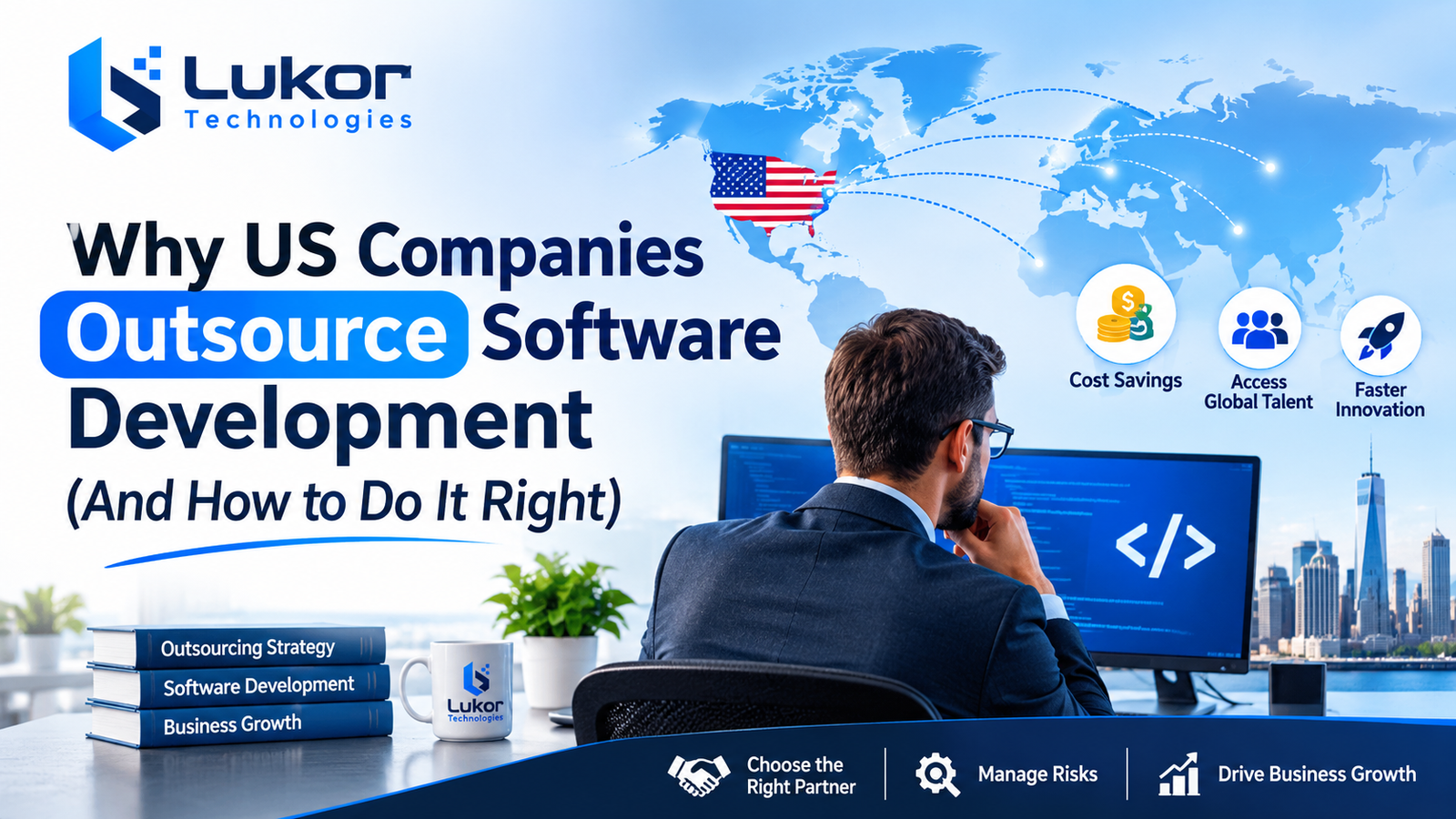
Software development is essential for businesses looking to improve operations, build digital products, and stay competitive. However, maintaining an in-house development team requires significant time, investment, and technical resources. As a result, many US companies outsource software development to access skilled professionals, manage costs, and accelerate product delivery.
Why do US companies outsource software development? Key reasons include reducing development expenses, accessing global talent, increasing team flexibility, accelerating projects, and focusing on core business activities. Outsourcing also provides access to specialists in AI, cloud computing, mobile applications, and enterprise software without building every capability in-house.
This approach is expected to remain important as demand for external development expertise grows. The global software development outsourcing market is projected to reach $619.04 billion by 2030, reflecting the increasing role of outsourced teams in delivering software solutions.
Whether developing a new product or modernizing existing systems, companies can use outsourcing to meet changing technology needs. Understanding what custom software development involves can also help businesses identify the right solutions for their requirements.
This guide explores the key reasons US companies outsource software development, common outsourcing models, cost factors, potential risks, and how to choose the right development partner.
Quick Answer: Why Do US Companies Outsource Software Development?
US companies outsource software development to reduce costs, access specialized technical expertise, overcome hiring challenges, accelerate product development, and scale engineering teams according to project requirements.
Outsourcing also helps businesses avoid some of the recruitment, training, infrastructure, and ongoing management responsibilities associated with maintaining a large in-house development team. Depending on the project, companies can work with offshore, nearshore, or onshore development partners.
The most common reasons include:
- Lower software development and operational costs.
- Access to a larger pool of skilled developers.
- Faster project development and product launches.
- Flexible development teams and resources.
- Specialized expertise in modern technologies.
- More time to focus on core business operations.
- Support for long-term digital transformation.
10 Reasons Why US Companies Outsource Software Development
Software development outsourcing offers several business advantages beyond reducing expenses. It gives companies more flexibility in how they plan, build, and maintain technology solutions.
Here are ten common reasons US businesses choose outsourcing.
1. Reduce Software Development Costs
Building an in-house software development team involves more than paying developer salaries. Businesses must also consider recruitment expenses, employee benefits, training, software licenses, office infrastructure, and ongoing management costs.
Outsourcing can reduce some of these expenses by letting companies work with external development teams based on project requirements. Instead of hiring multiple full-time employees, a business can engage specialists for a specific project or development phase.
For example, a US startup developing a minimum viable product (MVP) may outsource its initial development rather than immediately hiring a complete engineering team. This approach can help the business manage its initial investment while validating its product idea.
However, outsourcing does not automatically guarantee lower costs. Project complexity, communication requirements, engagement models, and ongoing maintenance all affect the total investment.
2. Access a Global Talent Pool
Finding developers with the right technical skills can be challenging, particularly when a project requires expertise in specialized technologies.
US software development outsourcing gives businesses access to professionals from different countries and technology markets. Companies can evaluate development partners based on their technical experience, industry knowledge, project portfolios, and ability to meet specific requirements.
This can be particularly useful for projects involving:
- Artificial intelligence and machine learning.
- Cloud computing and DevOps.
- Custom web and mobile applications.
- Enterprise software development.
- SaaS product engineering.
- API development and system integration.
Instead of limiting recruitment to the local talent market, businesses can consider qualified development teams from different regions.
3. Overcome the Shortage of Skilled Developers
Recruiting experienced software developers can take time, especially when companies need specialists in emerging technologies or complex development environments.
The challenge is not simply finding developers. Businesses also need professionals who understand software architecture, security, databases, integrations, testing, and deployment.
Outsourcing provides another way to fill these technical requirements. Companies can work with an established development team that already has experience with the technologies needed for their projects.
For example, an enterprise planning to modernize its legacy systems may need cloud engineers, backend developers, database specialists, and QA professionals. An outsourcing partner can provide access to these different skill sets without requiring the company to recruit every specialist individually.
4. Accelerate Time to Market
Launching a software product at the right time can be important for businesses entering competitive markets. Delays in development may affect product launches, customer acquisition, and business opportunities.
Outsourcing can help accelerate development when an external team has the required technical skills, established workflows, and available resources. Businesses can also use external developers to handle specific project components while their internal teams focus on other responsibilities.
For example, a company developing a customer-facing mobile application might outsource backend development and API integration while its internal product team manages business requirements and customer experience.
However, faster delivery depends on realistic planning, clear requirements, effective collaboration, and timely feedback. Outsourcing alone does not guarantee shorter development timelines.
5. Scale Development Teams Easily
Business technology requirements change over time. A startup may initially need only a few developers, while a growing SaaS company may require additional specialists as its platform expands. Maintaining a permanent team for every possible requirement can increase long-term expenses.
Software development outsourcing allows businesses to adjust external resources according to project scope and development needs. They can add specialists during important development phases and reduce external involvement when requirements change.
This flexibility can support:
- MVP development and product launches.
- New feature development.
- Platform upgrades and modernization.
- Cloud migration projects.
- Application maintenance and support.
For businesses with changing workloads, flexible team structures can make resource planning more manageable.
6. Focus on Core Business Activities
Software development requires continuous planning, technical coordination, testing, and maintenance. Managing these activities internally can take time away from other important business responsibilities.
Outsourcing allows companies to delegate selected technical tasks to external specialists while internal teams concentrate on business strategy, customer relationships, sales, operations, and product direction.
For example, a healthcare company developing a patient management platform may prefer to focus on clinical operations and business requirements while an experienced software development partner handles application engineering.
The company still needs to provide direction, review progress, and make important product decisions. Outsourcing transfers selected development responsibilities, not overall business ownership.
7. Access Specialized Technical Expertise
Modern software projects often require knowledge of multiple technologies and development practices. A single internal team may not have experience in every required area.
Through offshore or other outsourcing arrangements, US companies can access specialists in technologies such as:
- Artificial intelligence and machine learning.
- Generative AI and automation.
- Cloud infrastructure and DevOps.
- React, Angular, and Next.js.
- Node.js, Python, and .NET.
- Flutter and React Native.
- Database engineering and API integration.
This is particularly useful when businesses need expertise for a specific project rather than a permanent internal role.
For example, a business adding AI-powered features to an existing application can partner with specialists offering AI development services to handle model integration, data processing, and application development.
8. Reduce Hiring and Operational Responsibilities
Recruiting and managing an in-house software development team involves several responsibilities, including candidate sourcing, technical interviews, onboarding, training, employee administration, and performance management.
These activities can consume considerable time and internal resources.
Working with an established outsourcing company can reduce some of these recruitment and operational responsibilities. The provider generally manages its own employees and coordinates the agreed development work.
This can help companies that need development capabilities but don’t want to build a large internal engineering department.
However, businesses should still assign someone internally to manage requirements, review deliverables, communicate priorities, and evaluate project progress.
9. Support Digital Transformation and Innovation
Businesses across industries are investing in digital solutions to improve customer experiences, automate processes, and make better use of data. These initiatives may require new software platforms, application modernization, cloud infrastructure, AI integration, or system connectivity.
US software development outsourcing gives companies another way to access the technical resources needed for digital transformation.
For example:
- Retail businesses can develop custom e-commerce platforms.
- Healthcare organizations can build patient management and telehealth applications.
- Financial companies can modernize payment and transaction systems.
- Logistics businesses can implement fleet management and tracking software.
- Enterprises can integrate ERP systems and automate internal workflows.
By working with experienced development teams, businesses can explore new technology initiatives without depending entirely on their existing technical resources.
10. Maintain Long-Term Development Flexibility
Software products require ongoing improvements after their initial launch. Businesses may need to introduce new features, fix bugs, improve performance, strengthen security, or adapt to changing customer requirements.
Outsourcing can provide continued access to technical resources for these activities.
Depending on the agreement, an external team may support:
- Application maintenance and updates.
- Performance monitoring and optimization.
- Security improvements.
- Feature enhancements.
- Cloud infrastructure management.
- Technical support and troubleshooting.
This arrangement can help businesses maintain and improve their software without necessarily expanding their permanent internal development teams.
What Types of Software Development Do US Companies Outsource?
US companies outsource different types of software development depending on their business objectives, technical requirements, and available internal resources.
Some of the most common outsourced development services include:
Custom Software Development
Businesses outsource custom software development when off-the-shelf solutions cannot meet their specific operational needs. These solutions are designed around business workflows, integrations, reporting, and automation.
Common examples include CRM systems, inventory management software, and business applications.
Web Application Development
Companies outsource web application development to build browser-based platforms for customers, employees, and business partners. Common projects include customer portals, booking systems, dashboards, and business management applications.
Mobile App Development
Businesses outsource mobile app development to create applications for iOS and Android devices. Common examples include e-commerce, healthcare, financial, delivery, and customer engagement apps.
AI and Machine Learning Development
Companies outsource AI development to introduce intelligent features and automate business processes. Typical solutions include AI chatbots, predictive analytics, recommendation engines, and document processing systems.
SaaS Product Development
Startups and established businesses outsource SaaS development to build subscription-based software products. These platforms may include multi-tenant architecture, user management, subscription billing, cloud infrastructure, and third-party integrations.
A SaaS project management platform is another example of software built to support task tracking, team collaboration, and project reporting.
Enterprise Software Development
Organizations outsource enterprise software development to modernize internal systems and connect business operations. Common solutions include ERP platforms, financial management systems, supply chain applications, and business intelligence tools.
For example, Lukor Technologies’ custom ERP software development project demonstrates how a centralized platform can connect finance, procurement, inventory, and business operations.
Software Maintenance and Support
Businesses also outsource software maintenance to keep applications secure, reliable, and up to date. Services typically include bug fixes, security updates, performance optimization, infrastructure monitoring, and feature enhancements.
Which Software Development Outsourcing Models Do US Companies Use?
US businesses can choose different outsourcing models depending on their location preferences, project requirements, communication needs, and budget.
The three common models are offshore, nearshore, and onshore outsourcing.
Offshore Outsourcing
Offshore outsourcing involves hiring a software development company in a geographically distant country. For example, US businesses may partner with development teams in India to build web applications, mobile apps, and enterprise software.
Advantages:
- Access to a broader global talent pool.
- Potential cost savings.
- Flexible development team options.
- Specialized technical expertise.
Considerations:
- Time-zone differences.
- Communication and coordination.
- Project management.
- Data security and contractual responsibilities.
Nearshore Outsourcing
Nearshore outsourcing involves working with development teams in nearby countries. For US businesses, common destinations include Mexico and other Latin American countries.
Advantages:
- Greater working-hour overlap.
- Easier real-time communication.
- Geographic proximity.
- Convenient project coordination.
Considerations:
- Availability of specialized talent.
- Differences in development costs.
- Team capacity and experience.
Onshore Outsourcing
Onshore outsourcing means hiring an external software development company within the United States. This model is suitable for businesses that prioritize local collaboration, domestic market knowledge, and aligned working hours.
Advantages:
- Similar working hours.
- Easier direct collaboration.
- Familiarity with the US business environment.
- Convenient communication.
Considerations:
- Generally higher development costs.
- Competition for specialized talent.
- Budget and team availability.
Choosing the right outsourcing model requires evaluating more than development costs. Businesses should consider technical capabilities, communication, project complexity, security requirements, and long-term project value.
How Much Does It Cost to Outsource Software Development?
The cost of outsourcing software development depends on several factors, including project complexity, development team location, technology requirements, team size, and engagement duration.
There is no single price that applies to every project. A simple business application may require considerably less investment than a complex enterprise platform with multiple integrations and advanced security requirements.
The following factors influence the total outsourcing cost.
1. Developer Rates and Geographical Differences
Developer rates vary by country, experience, technical expertise, and service provider. For example, development costs in the US may differ from those in India, Mexico, Poland, and the Philippines.
Businesses should compare experience, code quality, communication, and delivery capabilities rather than choosing a provider based only on hourly rates.
2. Project Complexity and Requirements
Projects with advanced functionality and integrations generally require more development resources.
Costs may increase with:
- Complex business logic and workflows.
- Multiple user roles and permissions.
- Third-party API integrations.
- Advanced reporting and analytics.
- AI-powered features and security requirements.
3. Team Size and Engagement Duration
The number of specialists and project duration directly affect the overall investment. Depending on project requirements, teams may include frontend and backend developers, UI/UX designers, QA engineers, DevOps specialists, and project managers.
Larger teams and longer engagements generally increase costs.
4. Technology and Infrastructure Costs
The selected technology stack and hosting environment can add to development expenses. Businesses should account for cloud hosting, database services, software licenses, third-party APIs, and monitoring tools.
5. Maintenance and Ongoing Support
Software costs continue beyond the initial launch. Businesses should budget for bug fixes, security updates, performance optimization, infrastructure management, and future feature enhancements.
A realistic outsourcing budget should include both initial development and long-term maintenance costs.
Which Countries Are Best for US Companies to Outsource Software Development?
Several countries have established software development industries and provide outsourcing options for US businesses. The best destination depends on technical expertise, project requirements, budget, communication, and time-zone compatibility.
Here are five countries commonly considered for software development outsourcing.
India
India is a major offshore software development destination, offering access to experienced developers across multiple technologies and industries.
US companies commonly consider Indian teams for custom software, web and mobile applications, SaaS platforms, AI solutions, and enterprise software.
Potential advantages:
- Large technical talent pool.
- Expertise across multiple technologies.
- Flexible team and engagement options.
- Potential cost savings compared with US-based development.
Poland
Poland has an established technology sector serving international businesses, particularly in enterprise applications, web platforms, cloud solutions, and specialized engineering.
Potential advantages:
- Access to European technical talent.
- Strong software engineering capabilities.
- Convenient collaboration with European businesses.
Ukraine
Ukraine has an established IT services industry, with developers experienced in web and mobile applications, cloud technologies, and software engineering.
Potential advantages:
- Experienced software engineering professionals.
- International project experience.
- Specialized technical capabilities.
Businesses should also evaluate operating conditions, security, and project continuity before selecting a provider.
Mexico
Mexico is a popular nearshore outsourcing destination for US companies because of its geographic proximity and overlapping working hours.
Potential advantages:
- Geographic proximity to the US.
- Convenient time-zone alignment.
- Easier real-time communication and collaboration.
Philippines
The Philippines offers software development and IT outsourcing services, including web development, application support, and software maintenance.
Potential advantages:
- Established outsourcing industry.
- English-language business communication.
- Development and IT support capabilities.
How Should US Companies Choose?
There is no universally best country for software development outsourcing. Businesses should compare providers based on technical expertise, relevant project experience, communication, security practices, contractual terms, and total project costs.
Choosing a capable development partner with the right skills and delivery processes is more important than selecting a country based solely on hourly rates.
What Are the Challenges and Risks of Software Development Outsourcing?
Although outsourcing offers several advantages, it also introduces challenges that businesses should consider before starting a project. Understanding common software development industry challenges can help US companies prepare better processes and reduce outsourcing risks.
1. Communication and Time-Zone Differences
Working with an offshore development team may involve different time zones, working schedules, and communication practices. Without clear communication, project updates, feedback, and important decisions can be delayed.
2. Data Security and Intellectual Property Risks
Software projects may involve sensitive business information, customer records, source code, and proprietary technology. Poor security practices or unclear contractual terms can create unnecessary risks.
3. Quality Control and Project Management
An outsourcing partner may deliver software that does not fully meet the expected requirements if quality standards and acceptance criteria are unclear.
4. Unclear Requirements and Project Scope
Changes in business requirements can lead to additional development work, budget increases, and delivery delays.
5. Hidden Costs and Delivery Delays
The initial outsourcing estimate may not include every expense, such as infrastructure, third-party services, additional integrations, or ongoing support.
How to Choose the Right Software Development Outsourcing Company
Selecting the right development partner is one of the most important decisions in an outsourcing project. A suitable provider should understand your business requirements, demonstrate relevant technical experience, communicate clearly, and have a structured approach to software delivery.
Here are seven factors to evaluate when comparing software development outsourcing companies.
1. Define Your Project Requirements
Before approaching development companies, identify your business objectives, target users, essential features, technical requirements, timeline, and budget. Clear requirements help providers prepare accurate proposals and make comparisons easier.
2. Evaluate Technical Expertise and Experience
Review the company’s experience with the technologies and development practices required for your project.
For example, AI applications may require Python, machine learning frameworks, APIs, and cloud infrastructure, while SaaS platforms may require multi-tenant architecture, databases, and subscription management.
Prioritize relevant project experience over a long list of technologies.
3. Review Previous Projects and Case Studies
Examine the company’s case studies, completed projects, and industry experience to understand its development capabilities. Look for projects with similar functionality, technical requirements, or business objectives to yours.
4. Check Communication and Project Management
Effective communication keeps outsourced projects organized and aligned with business goals. Ask about project planning, progress reporting, meeting schedules, task management tools, documentation, and communication responsibilities.
5. Understand Pricing and Engagement Models
Software development companies commonly offer three engagement models:
- Fixed-price: Suitable for projects with clearly defined requirements and deliverables.
- Time-and-materials: Offers flexibility when project requirements may change.
- Dedicated development team: Suitable for ongoing development and long-term projects.
Compare payment terms, included services, scope changes, and maintenance costs before signing an agreement.
6. Evaluate Security and Intellectual Property Policies
Review how the provider protects business data, source code, development environments, and access credentials. Ensure the agreement clearly defines confidentiality, data protection, intellectual property ownership, and responsibilities after project completion.
7. Start With a Clearly Defined Project Scope
Consider beginning with a discovery phase, technical assessment, or small development milestone before committing to a larger engagement. This helps evaluate the provider’s technical understanding, communication, and delivery approach while reducing project uncertainty.
How to Outsource Software Development Successfully
Choosing a development partner is only the beginning. Successful outsourcing also requires clear expectations, active collaboration, and consistent project management.
Follow these practices to manage the engagement effectively.
1. Set Clear Business Objectives
Define what the software should accomplish and how success will be measured. Identify the intended users, key business problems, essential features, and expected outcomes.
2. Select the Right Outsourcing Model
Choose between offshore, nearshore, and onshore outsourcing based on your budget, communication preferences, technical requirements, and project complexity. The selected model should support your business needs rather than simply minimize development costs.
3. Establish Communication Processes
Decide how frequently the teams will communicate and which tools they will use for meetings, project updates, documentation, and feedback. Assign clear responsibilities to internal stakeholders and external team members.
4. Define Milestones and Deliverables
Break the project into manageable development phases. Each phase should have defined deliverables, timelines, review requirements, and acceptance criteria. This makes it easier to monitor progress and identify problems early.
5. Monitor Development Progress
Review project updates, completed tasks, development risks, and upcoming milestones regularly. Use project management tools to maintain visibility into the work and ensure that the development team remains aligned with business priorities.
6. Conduct Regular Quality Testing
Testing should take place throughout development rather than only before launch. Depending on the project, quality assurance may include functional testing, integration testing, performance testing, security testing, and user acceptance testing.
7. Plan for Maintenance and Support
Before launch, establish who will handle application updates, bug fixes, infrastructure monitoring, security improvements, and future development. Clear maintenance responsibilities help businesses manage their software after the initial project is completed.
In-House vs. Outsourced Software Development: What’s the Difference?
Both in-house and outsourced software development can support business technology needs. The right approach depends on project requirements, internal capabilities, budget, and long-term development plans.
| Comparison factor | In-house development | Outsourced development |
|---|---|---|
| Hiring | Direct recruitment | External development provider |
| Cost structure | Salaries, benefits, and overhead | Contract, hourly, or project-based costs |
| Team scaling | Requires internal hiring | Can offer flexible team arrangements |
| Technical expertise | Depends on existing employees | Access to external specialists |
| Project control | Direct internal management | Shared coordination with provider |
| Communication | Direct internal interaction | Requires agreed communication processes |
| Long-term maintenance | Managed internally | Can be handled through an ongoing agreement |
When is in-house development suitable?
In-house development may be appropriate when a business needs continuous internal engineering capabilities, close control over daily development activities, or teams working with highly sensitive systems.
When is outsourcing more suitable?
Outsourcing may be a better fit when a business needs specialized technical skills, additional development capacity, a defined project team, or flexibility without expanding its permanent workforce.
Some companies also use a hybrid approach, combining an internal product or engineering team with external development specialists.
There is no single solution for every business. Companies should evaluate their technical requirements, operational priorities, and long-term costs before choosing an approach.
Conclusion
Software development outsourcing helps US companies access global technical expertise, manage development costs, and build digital solutions more efficiently. However, success depends on choosing the right development partner, defining clear requirements, maintaining effective communication, and ensuring consistent quality.
Whether building an MVP, developing a custom application, or modernizing enterprise systems, companies should choose an outsourcing strategy that supports their technical needs and long-term business goals.
Lukor Technologies helps startups, growing businesses, and enterprises build secure, scalable digital solutions through custom software, web and mobile app, AI, SaaS, and enterprise software development services. If you’re planning your next software project, contact us to discuss your requirements.
Frequently Asked Questions
1. Why do US companies outsource software development?
US companies outsource software development to reduce costs, access global technical talent, overcome hiring challenges, accelerate product development, and scale engineering resources. It also helps businesses focus on core operations while external specialists handle selected development tasks.
2. Is outsourcing software development cheaper than hiring in-house developers?
Outsourcing can reduce certain expenses associated with recruitment, salaries, benefits, training, and infrastructure. However, total costs depend on project complexity, provider location, engagement model, communication requirements, and ongoing maintenance. It is important to compare the complete project cost rather than hourly rates alone.
3. Which countries are best for US software development outsourcing?
India, Poland, Ukraine, Mexico, and the Philippines are among the countries US businesses may consider. The best destination depends on technical expertise, project requirements, budget, time-zone compatibility, communication, and provider experience.
4. How much does it cost to outsource software development?
The cost varies according to project scope, technical complexity, team size, developer experience, location, and development duration. A simple application generally requires less investment than a complex enterprise platform. Businesses should request a detailed estimate based on their specific requirements.
5. What are the biggest risks of outsourcing software development?
Common risks include communication gaps, time-zone differences, data security concerns, unclear project requirements, quality issues, hidden costs, and delivery delays. Businesses can manage these risks through clear contracts, defined milestones, security policies, regular communication, and consistent quality testing.
6. How can US companies find reliable offshore software development companies?
US companies should review technical expertise, relevant case studies, client references, communication practices, security policies, pricing structures, and project management processes. Starting with a clearly defined project or initial development milestone can also help evaluate a provider before entering a larger engagement.
7. Is software development outsourcing suitable for startups?
Yes. Outsourcing can help startups access experienced developers, build MVPs, test product ideas, and develop digital products without immediately establishing a complete in-house engineering team. However, startups should define their requirements, control project scope, and choose a provider that understands their product goals.