Building a successful mobile app takes more than a good idea and a talented development team. It requires a clear understanding of user needs, thoughtful planning, the right technology, strong security, and a commitment to continuous improvement. The opportunity is also growing, with the global mobile application market projected to reach USD 626.39 billion by 2030, growing at a compound annual growth rate (CAGR) of 14.3% from 2024 to 2030.
Whether you are a startup founder developing your first product or an established business expanding its digital services, following the right mobile app development tips can help you make better decisions, avoid common mistakes, and create an app that delivers lasting value.
From validating your idea and choosing a development approach to testing, launching, and maintaining your application, this guide covers 15 practical ways to improve your mobile app development process. If you want a deeper understanding of the entire journey, explore our complete guide to custom mobile app development for additional insights into planning, technologies, costs, and implementation.
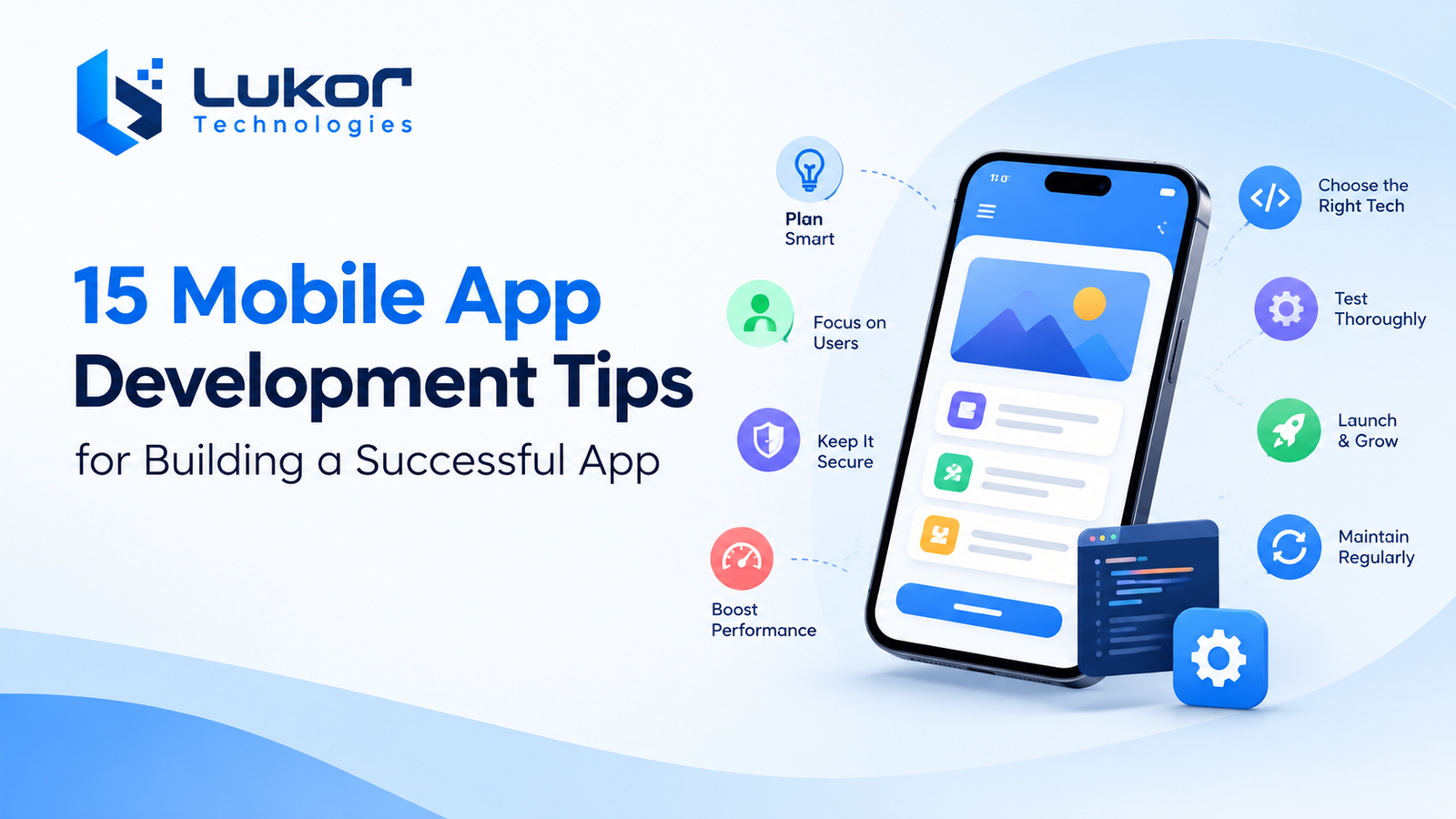
15 Essential Mobile App Development Tips
Building a successful mobile app requires a balance of business goals, user needs, and technical quality. These mobile app development tips cover the essential steps to plan, build, test, launch, and maintain a reliable application.
1. Define Your App’s Purpose and Target Audience
Start by identifying the problem your app will solve and the people who will use it. Clear objectives help you prioritize features, select suitable technologies, and measure success.
Ask yourself three questions:
- Who is the target audience?
- What problem will the app solve?
- What makes it different from existing alternatives?
For example, a retail app might focus on simplifying shopping and checkout, while a healthcare app may prioritize appointment scheduling and secure communication.
Define measurable goals, such as completed purchases, bookings, or user engagement, to evaluate whether your app delivers value.
2. Validate Your Mobile App Idea Before Development
Before investing heavily in development, confirm that your idea addresses a genuine user need. Researching the market early can help you identify opportunities and avoid unnecessary costs.
You can validate your idea by interviewing potential users, analyzing competitor reviews, researching demand, and testing a simple prototype.
Look for recurring user frustrations that your app could solve more effectively. Early feedback helps you make informed decisions instead of relying on assumptions.
3. Start With a Minimum Viable Product (MVP)
A minimum viable product (MVP) includes the essential features needed to deliver value and test your idea with real users.
Instead of developing every planned feature at once, prioritize functionality that solves the main problem. For example, a food delivery MVP might include restaurant listings, ordering, payments, and order tracking, while loyalty programs can come later.
To prioritize features:
- Identify the core user problem.
- List the features required to solve it.
- Separate essential features from optional enhancements.
- Prioritize based on value, cost, and complexity.
An MVP helps you gather feedback sooner and make better decisions about future development without compromising essential security or reliability.
4. Choose the Right Mobile App Development Approach
Your development approach affects cost, performance, platform compatibility, and maintenance.
- Native development: Suitable for applications requiring platform-specific capabilities or highly customized performance.
- Cross-platform development: Allows teams to share much of their code across iOS and Android.
- Progressive web apps (PWAs): Provide app-like experiences through supported web browsers.
The right choice depends on your required features, target audience, budget, and long-term plans. Compare these options before committing to a technology.
5. Select the Right Technology Stack
A technology stack includes the programming languages, frameworks, databases, APIs, and cloud services used to build and operate your app.
Evaluate technologies based on:
- Compatibility with your product requirements
- Security and available support
- Scalability and maintainability
- Integration requirements
- Developer expertise and long-term costs
Avoid choosing a framework simply because it is popular. Select tools that fit your project and can be maintained as your application evolves.
Explore these mobile app development tools to learn more about technologies that can support your development process.
6. Prioritize User Interface (UI) and User Experience (UX)
Effective mobile app design best practices focus on making the application easy to understand and use. Prioritize clear navigation, readable text, consistent layouts, accessible controls, and simple user journeys. Provide useful feedback when users submit forms or encounter errors.
For example, a booking app should guide users through selecting a service, choosing a time, and confirming their reservation without unnecessary steps. Test your designs with representative users to identify confusing interactions and improve usability before launch.
7. Make Mobile App Security a Priority
Security should be part of the development process from the beginning, especially when an app handles personal, financial, or business information.
Important mobile app security best practices include:
- Implement secure authentication and access controls.
- Protect sensitive data during transmission and storage.
- Avoid embedding secret credentials in application code.
- Keep dependencies updated and test for vulnerabilities.
- Request only necessary device permissions.
- Secure APIs against unauthorized access.
Consider relevant privacy and regulatory requirements early. Regular updates, monitoring, and security reviews help protect the application after launch.
8. Optimize App Performance and Loading Speed
Slow loading, frequent crashes, and unresponsive screens can frustrate users. Mobile app performance optimization should therefore be considered throughout development.
Improve performance by optimizing images, reducing unnecessary network requests, improving API response times, and managing memory efficiently. Use caching where appropriate and handle interrupted network connections gracefully.
Test on real devices and monitor crashes and response times to identify performance bottlenecks. Focus on making common tasks fast and reliable under realistic conditions.
9. Ensure Compatibility Across Devices and Platforms
Mobile users have different screen sizes, operating system versions, hardware capabilities, and network conditions. Compatibility testing helps deliver a consistent experience across supported devices.
Make sure you:
- Test supported iOS and Android versions.
- Check layouts across different screen sizes.
- Verify important device features and permissions.
- Test under different network conditions.
- Check accessibility and text scaling.
Use a testing matrix based on your target audience rather than attempting to test every device available. Combine automated testing with real-device checks to identify platform-specific issues.
10. Build a Reliable Backend and Scalable Architecture
Many applications depend on backend services, databases, APIs, and external integrations. Poor architecture can lead to slow responses, unreliable functionality, and expensive changes as the product grows.
Follow these mobile app development best practices:
- Design clear and reliable APIs.
- Protect backend services with appropriate access controls.
- Choose databases suited to your requirements.
- Monitor service availability and response times.
- Plan for realistic increases in traffic and data.
- Maintain suitable backup and recovery procedures.
Avoid unnecessary complexity at the beginning. Build an architecture that meets current needs and can evolve as your application gains users and functionality.
11. Test Your Mobile App Before Launch
Testing helps verify that your application works correctly, protects user information, and provides a reliable experience.
Mobile app testing best practices include:
- Functional testing: Checks that features work as expected.
- Integration testing: Verifies communication between components and external services.
- Usability testing: Evaluates how easily people complete tasks.
- Performance testing: Measures responsiveness and stability.
- Security testing: Identifies potential vulnerabilities.
- Compatibility testing: Checks supported devices and platforms.
Also test important edge cases, such as interrupted payments, poor connectivity, and invalid user input. Automated tests can help catch regressions, while manual testing helps assess real-world usability.
12. Integrate Analytics and Crash Monitoring
Analytics helps you understand how people use your app and where improvements may be needed.
Track relevant metrics such as user activation, task completion, conversion rates, retention, crashes, and response times. Choose measurements that reflect your business objectives rather than collecting data without a clear purpose.
For example, an ecommerce app might track completed purchases and checkout abandonment, while a productivity app may focus on task completion.
Combine analytics with user feedback to identify problems and prioritize improvements. Collect only necessary data and apply appropriate privacy and access controls.
13. Plan Your App Store Launch and Optimization
A successful launch requires more than submitting an application. App store optimization (ASO) helps communicate your app’s value to potential users.
Before launch:
- Write a clear app name and description.
- Use relevant keywords naturally in supported metadata fields.
- Prepare accurate screenshots and app icons.
- Test installation and onboarding.
- Review applicable app store submission requirements.
- Plan how to monitor feedback and resolve issues.
Keep your listing accurate and update it when the application changes meaningfully. Continue reviewing performance and user feedback after release.
14. Collect User Feedback and Improve Continuously
User feedback can reveal problems that internal testing may miss. Provide ways for users to share suggestions through support channels, in-app feedback, reviews, or interviews.
To make feedback actionable:
- Identify recurring issues.
- Compare feedback with analytics.
- Prioritize improvements by user impact and effort.
- Test significant changes.
- Measure the results.
Avoid adding every requested feature. Focus on improvements that address genuine problems and support your product goals.
15. Maintain and Update Your Mobile App Regularly
Mobile app maintenance best practices help keep your application secure, compatible, and reliable after launch. A maintenance plan should cover bug fixes, dependency updates, security patches, performance monitoring, operating system compatibility, and third-party integrations.
You should also plan for backups, recovery procedures, and future improvements where appropriate. Maintenance requirements depend on the application’s complexity, infrastructure, and integrations. Budget for ongoing support from the beginning instead of treating it as an unexpected expense.
Regular maintenance helps protect the user experience and provides a stable foundation for future development.
Common Mobile App Development Mistakes to Avoid
Even with a clear strategy, certain mistakes can create unnecessary development costs, delays, and user frustration. Recognizing these problems early helps businesses make more informed decisions.
Common mobile app development mistakes include:
- Building too many features initially: An oversized first release increases complexity and can delay feedback from real users.
- Ignoring user research: Decisions based only on assumptions may produce an app that fails to address important user needs.
- Choosing technology without a clear reason: A fashionable framework is not necessarily the right choice for your requirements or team.
- Treating security as an afterthought: Late security changes can require significant rework and leave vulnerabilities unresolved.
- Skipping comprehensive testing: Problems involving real devices, poor connectivity, and third-party integrations may go unnoticed.
- Underestimating maintenance: Updates, bug fixes, infrastructure, and ongoing support require resources after launch.
- Ignoring performance and user feedback: Failing to monitor the app makes it harder to identify issues and prioritize improvements.
The best way to avoid these mistakes is to establish clear requirements, validate assumptions early, test throughout development, and plan for long-term support.
How Much Does Mobile App Development Cost?
Mobile app development costs depend on the application’s complexity, feature set, design requirements, technology choices, integrations, and testing needs. There is no single price that applies to every project.
For budgeting purposes, businesses should consider more than the initial development quote.
Key cost factors include:
- Features and functionality: Advanced workflows, real-time communication, and complex business logic require additional effort.
- UI/UX design: Research, prototyping, accessibility, and custom interfaces affect the overall budget.
- Platform requirements: Native development for multiple platforms may require more work than a suitable cross-platform approach.
- Backend and integrations: APIs, databases, payment systems, and third-party services add complexity.
- Security and testing: Quality assurance, performance testing, and specialized security requirements need appropriate investment.
- Ongoing maintenance: Updates, monitoring, bug fixes, and infrastructure costs continue after launch.
A practical way to manage costs is to define a clear scope, prioritize essential features, and establish milestones before development begins. Starting with an MVP may also help businesses validate demand before investing in a larger product.
How Do You Choose the Right Mobile App Development Company?
Choosing a mobile app development company involves evaluating its technical capabilities, development process, communication practices, and ability to support your product beyond launch.
Before making a decision, consider the following factors.
1. Review relevant experience. Examine previous projects that demonstrate experience with similar functionality, industries, or technical challenges.
2. Evaluate technical expertise. Ask how the team approaches architecture, security, integrations, performance, and testing.
3. Understand the development process. Look for clear requirements, defined milestones, regular communication, and a structured approach to handling changes.
4. Request transparent estimates. The proposal should explain the scope, deliverables, assumptions, timeline, and factors that could affect the final cost.
5. Confirm post-launch support. Clarify how bug fixes, updates, monitoring, and future enhancements will be handled.
6. Discuss ownership and documentation. Establish expectations for source code, intellectual property, technical documentation, access credentials, and third-party licenses.
A suitable development partner should explain its recommendations, identify potential risks, and help you make decisions that fit your business goals.
Lukor Technologies provides custom mobile app development services for businesses looking to turn product ideas and operational requirements into digital applications. When evaluating any provider, review its relevant capabilities, proposed approach, and project scope to determine whether it fits your needs.
Conclusion
Building a successful mobile application requires a combination of thoughtful planning, user-focused design, sound technical decisions, and ongoing improvement. The right approach helps businesses avoid common development mistakes while creating a product that is useful, secure, and dependable.
Start by validating your idea, understanding your audience, and prioritizing the features that deliver the most value. Choose a development approach that fits your requirements, invest in security and quality assurance, and use real user feedback to guide post-launch improvements.
Remember that launching the app is only one milestone. Consistent maintenance, performance monitoring, and product improvements help keep the application relevant as technology and user expectations change.
If you’re planning a new mobile app or looking to improve an existing application, contact Lukor Technologies to discuss your mobile app development project and explore an approach that aligns with your business goals.
Frequently Asked Questions
1. What are the most important mobile app development tips?
The most important mobile app development tips are to define clear goals, validate your app idea, prioritize essential features, choose the right technology, focus on user experience, protect user data, test thoroughly, and plan for ongoing maintenance. These practices help businesses build reliable applications that meet user needs and support long-term growth.
2. How do you build a successful mobile app?
To build a successful mobile app, start by identifying a genuine user problem and validating your idea. Define the requirements, prioritize features for a minimum viable product (MVP), choose an appropriate development approach, and create a user-friendly design. Test the application before launch, then use analytics and user feedback to guide continuous improvements.
3. Which mobile app development approach is best?
The best mobile app development approach depends on your budget, target platforms, performance requirements, and required device features. Native development offers platform-specific capabilities, cross-platform development can share code across iOS and Android, and progressive web apps provide browser-based access. Evaluate your product requirements before choosing an approach.
4. How can you improve mobile app performance?
You can improve mobile app performance by optimizing images, reducing unnecessary network requests, improving API response times, managing memory efficiently, and monitoring crashes. Test the application on real devices and under different network conditions to identify bottlenecks and deliver a smoother user experience.
5. How can you make a mobile app secure?
Make a mobile app secure by implementing appropriate authentication and access controls, protecting sensitive data, encrypting network communications, updating software dependencies, and testing APIs for vulnerabilities. Collect only necessary user information and review security throughout development and maintenance.
6. How much does it cost to develop a mobile app?
Mobile app development costs depend on the application’s features, complexity, design, platform requirements, backend integrations, and testing needs. A simple MVP generally requires less investment than a complex application with advanced functionality. Define your scope early and account for ongoing maintenance, infrastructure, and future enhancements when planning your budget.
7. How long does mobile app development take?
Mobile app development timelines vary according to project complexity, feature requirements, platform choices, integrations, team capacity, and testing needs. A basic MVP typically takes less time to build than an application with complex workflows or extensive integrations. A realistic timeline should include planning, design, development, testing, launch preparation, and post-launch support.